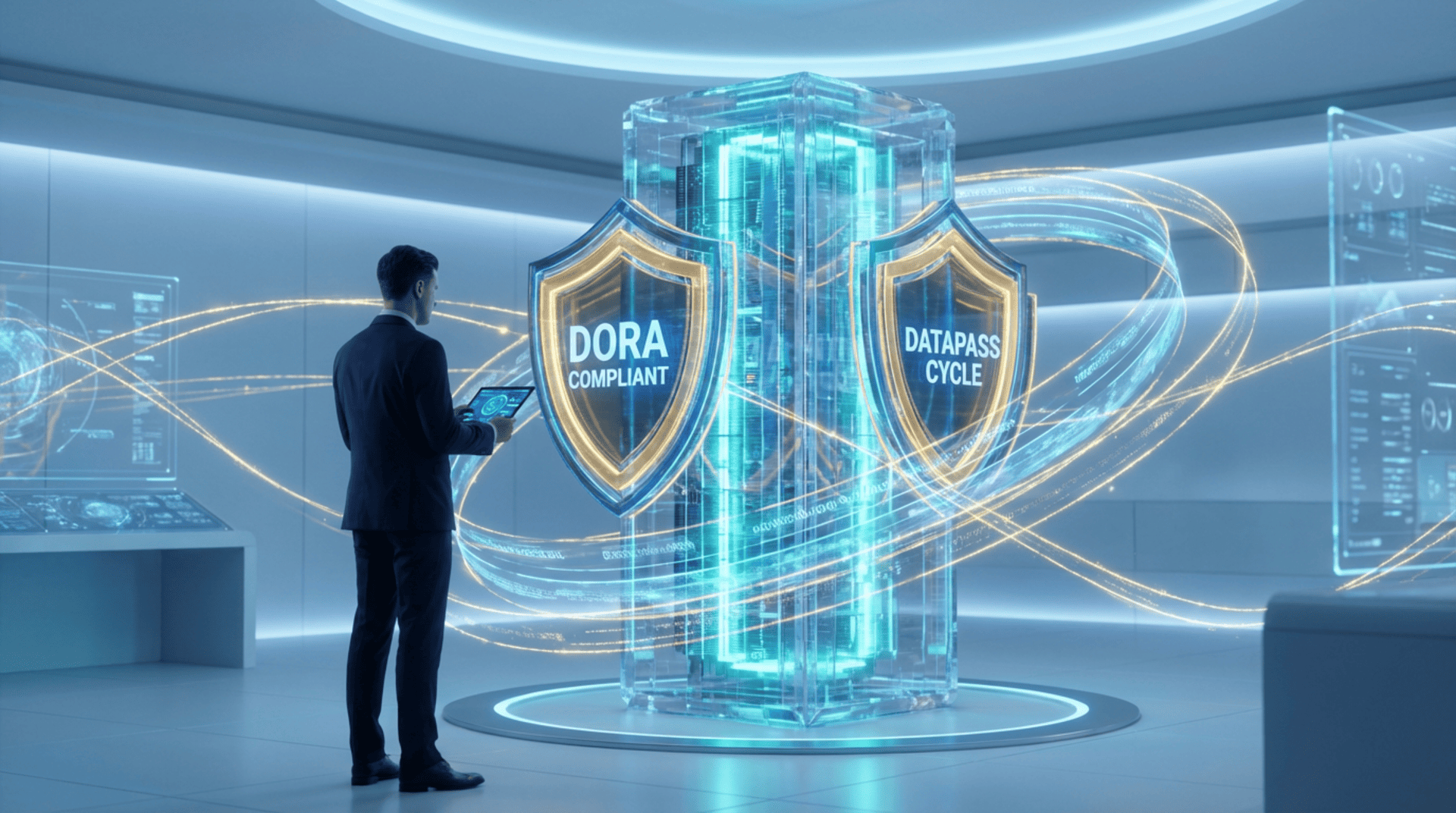
The Human Factor in z/OS Security: Ethics, Hardening, and Why DORA Demands Real Resilience
Let’s be honest: the urban legend that the Mainframe is an impenetrable vault by default still persists. "Nobody knows how to hack COBOL," they say, or "the system is so closed it’s secure." Nothing could be further from the truth. If you work in this sector, you know that "security by obscurity" stopped being a valid strategy decades ago.
Today, we are going to talk about what truly matters in
our operating system security: the people, the regulations forcing us to step up (like
DORA,
NIS2, and
GDPR), and why annual audits are no longer enough.
What Are We Talking About When We Talk About "The Iron"?
To start, let’s set the context. It’s not just a big computer in a basement; the
z os environment is the most powerful transaction server in the world. It is the heart of banking and insurance.
However, a modern mainframe isn't an island. It’s connected to the cloud, mobile apps, and open APIs. That openness is exactly where
ethical hacking becomes crucial. It is no longer enough to rely on perimeter defenses; we need to understand the
DORA regulation 2022 and how it impacts our infrastructure.
The Regulatory Tsunami: DORA, NIS2, and GDPR
It’s not just about having a firewall anymore. Europe has raised the bar.
First, we have
GDPR. We all know it, but now it joins two new giants:
- NIS2 Directive: The NIS2 Directive eurlex text expands cybersecurity requirements to critical sectors, demanding strict nis 2 compliance.
- DORA Regulation: The Digital Operational Resilience Act 2022 is the key. DORA doesn't just ask for security; it demands resilience.
Alongside these, financial institutions must juggle Basel 3 (or Basel III) and Solvency II data requirements. Whether it's Solvency II
compliance for insurers or
tpt solvency, the demand is the same: data integrity and availability.
The Compliance Landscape: PCI DSS, SOX, and ISO
For those in the payment sector, the
Payment Card Industry Data Security Standard is the bible. Achieving
PCI compliance for payment card industry standards goes beyond just ticking boxes.
You need to address PCI DSS requirements 12, from PCI DSS firewall requirements to PCI penetration testing. Whether you are evaluating PCI DSS compliance costs or preparing for an ASV PCI compliance scan, the goal is to protect payment card industry data. The PCI Security Standards Council standards are clear: you must integrate PCI and GDPR strategies to ensure PCI Data Security Standard compliance.
On the corporate governance side, we have the
Sarbanes-Oxley standards.
Dealing with SOX regulatory requirements and Sarbanes-Oxley rules means your SOX internal audit must be flawless. It’s about
SOX and internal control over financial reporting, which relies heavily on the mainframe's integrity.
And of course, the ISO standards. From
ISO 27001:2013 to the newer ISO 27001:2022, certification is a badge of trust. Companies often ask about the
iso 27001 certification cost for company, but the real value lies in the framework—like
iso iec 27001 2013 a 11.2 6 or
iso iec fdis 27001. Integrating
itil iso 27001 ensures that service management and security go hand in hand.
From "Snapshot" to Movie: DATAPASS and Continuous Improvement
This brings us to the critical point. Traditionally, mainframe security audits were annual events—a
pci compliance certification cost you paid once a year. But cybercriminals don't rest 364 days a year.
DORA and
NIS2 make it clear: resilience is a process, not a state. You need to increase both the
frequency and the
depth of your audits.
This is where continuous improvement systems like
DATAPASS come in. Instead of a blurry snapshot once a year,
DATAPASS gives you a high-definition movie of your security posture. It enables cyclical, deep auditing of system hardening, detecting security deviations the moment they occur—not months later during a
Sarbanes-Oxley compliance audit. It is the only way to ensure your
z/OS configurations evolve as fast as the threats.
Ethics, Training, and the Human Factor
Finally, technology doesn't configure itself. We need qualified professionals.
The role of the CISO is vital to drive a culture of internal
ethical hacking. We need experts who understand
NIST 2 frameworks and
pci accreditation. Certifications like
ISO 27001 and CISSP, or taking an ethical hacking course, are essential.
Whether it’s
ISO 27001 certification for individuals or understanding PCI data privacy, the human factor is the strongest (or weakest) link.
Conclusion
GDPR,
DORA, and
NIS2 are not enemies; they are guides. Protecting a Mainframe in 2026 requires breaking silos. It requires integrating
pci dss regulatory requirements into your daily operations and relying on recurrent auditing services like
DATAPASS.
Security in z/OS is no longer black magic; it's about cyclical processes, trained people, and real resilience.